How to understand haar in context
Main-category: Science
Sub-category: Mathematics
Sub-category: Mathematics
Contextual explanation: Mathematical function with step-like changes.
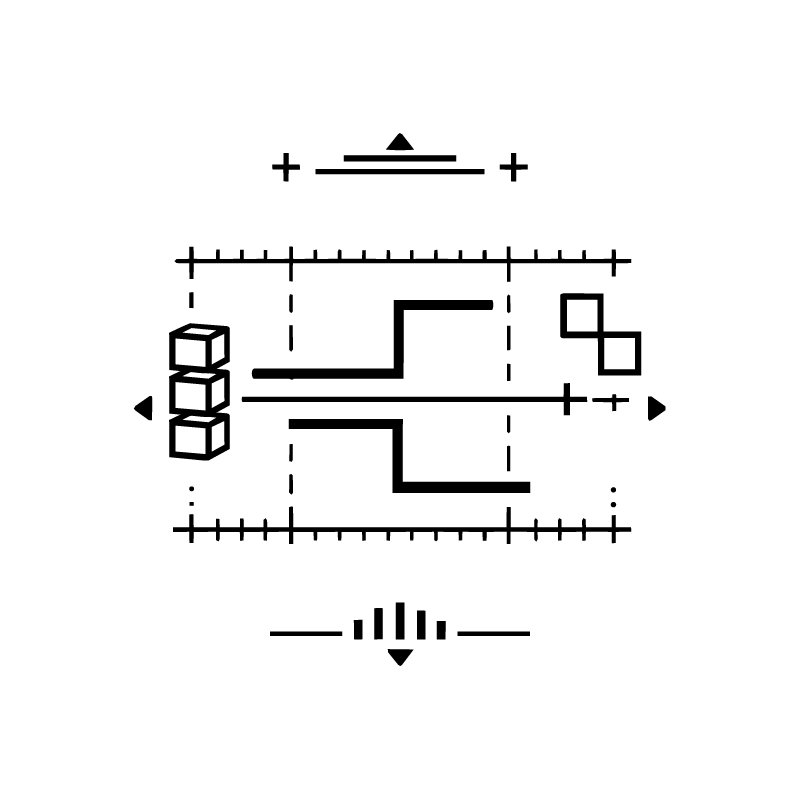
Haar is best understood as a mathematical function characterised by abrupt, step-like transitions. It serves as a foundational element in wavelet analysis, enabling the decomposition and measurement of signals by breaking them into simpler, localised components.
Haar is best understood as a mathematical function characterised by abrupt, step-like transitions. It serves as a foundational element in wavelet analysis, enabling the decomposition and measurement of signals by breaking them into simpler, localised components.
Themes: Decomposition and signal analysis.
The concept of Haar is central to the theme of signal analysis, as it provides a basic building block for breaking down complex signals into manageable parts. Its use in wavelet analysis highlights its importance in both theoretical mathematics and practical applications such as image and audio processing.
The concept of Haar is central to the theme of signal analysis, as it provides a basic building block for breaking down complex signals into manageable parts. Its use in wavelet analysis highlights its importance in both theoretical mathematics and practical applications such as image and audio processing.
Nuance: Discrete, step-function basis.
What distinguishes Haar within its category is its discrete, non-smooth nature. Unlike continuous functions, the Haar function's abrupt changes make it uniquely suited for representing sudden transitions in data, setting it apart from other mathematical bases used in signal processing.
What distinguishes Haar within its category is its discrete, non-smooth nature. Unlike continuous functions, the Haar function's abrupt changes make it uniquely suited for representing sudden transitions in data, setting it apart from other mathematical bases used in signal processing.