How to understand habdalah in context
Main-category: Belief
Sub-category: Religion
Sub-category: Religion
Contextual explanation: Ritual marking transition from sacred to ordinary time.
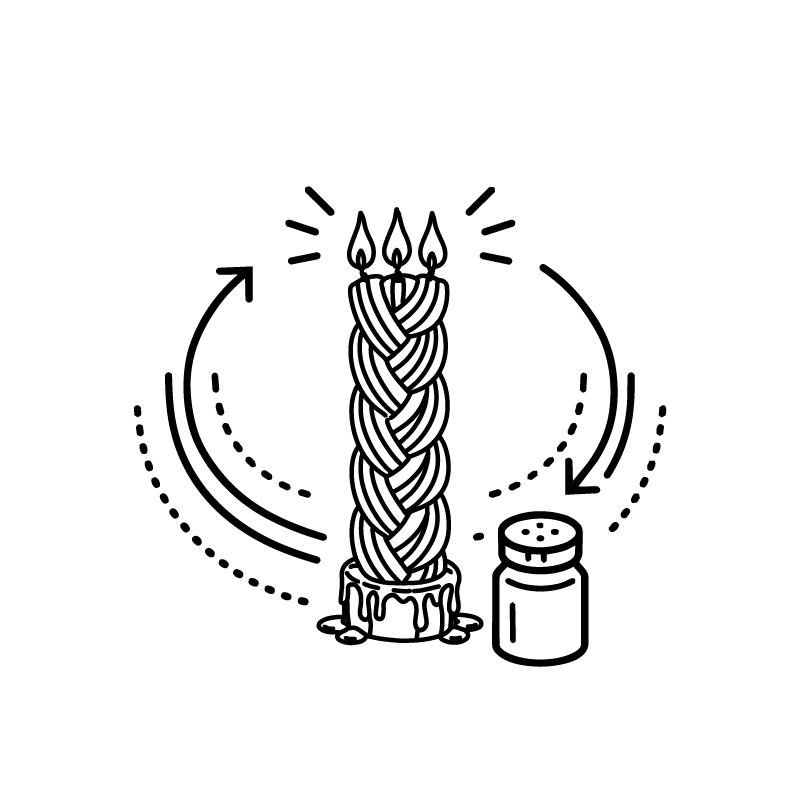
Habdalah is best understood as a religious ritual that signifies the conclusion of Shabbat and the return to the regular weekday. Through blessings over wine, fragrant spices, and a braided candle, it creates a sensory and symbolic boundary between sacred time and the everyday, reinforcing the cyclical rhythm of Jewish spiritual life.
Habdalah is best understood as a religious ritual that signifies the conclusion of Shabbat and the return to the regular weekday. Through blessings over wine, fragrant spices, and a braided candle, it creates a sensory and symbolic boundary between sacred time and the everyday, reinforcing the cyclical rhythm of Jewish spiritual life.
Themes: Transition and sanctity.
The theme of transition is central to Habdalah, as it marks the movement from a period of heightened sanctity (Shabbat) to the ordinary week. This ritual underscores the importance of boundaries in religious practice and highlights the value placed on both sacred and mundane aspects of life.
The theme of transition is central to Habdalah, as it marks the movement from a period of heightened sanctity (Shabbat) to the ordinary week. This ritual underscores the importance of boundaries in religious practice and highlights the value placed on both sacred and mundane aspects of life.
Nuance: Sensory ritual of separation.
What distinguishes Habdalah within its category is its use of multiple senses—taste, smell, and sight—to create a memorable and embodied experience of separation. This multisensory approach deepens the emotional and communal impact of the ritual, making the transition from Shabbat to weekday both tangible and meaningful.
What distinguishes Habdalah within its category is its use of multiple senses—taste, smell, and sight—to create a memorable and embodied experience of separation. This multisensory approach deepens the emotional and communal impact of the ritual, making the transition from Shabbat to weekday both tangible and meaningful.