How to understand Q-factor in context
Main-category: Quality
Sub-category: Measurement
Sub-category: Measurement
Contextual explanation: Dimensionless indicator of energy retention in oscillatory systems.
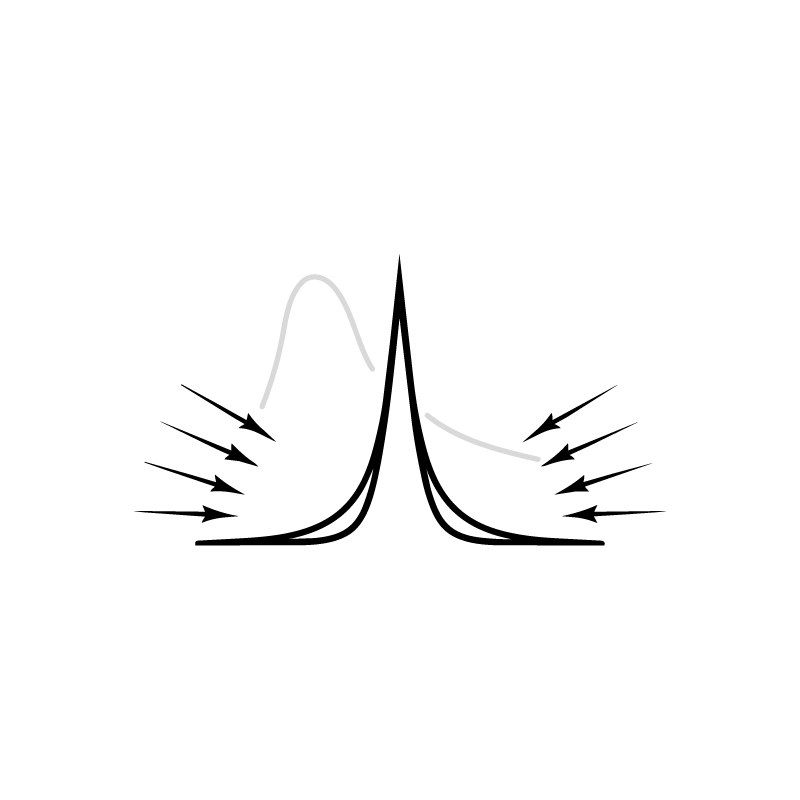
Q-factor is best understood as a quantitative measure—specifically, it expresses how efficiently a resonator or oscillator stores energy relative to how much energy it loses per cycle. A higher Q-factor indicates lower energy loss and greater selectivity or sharpness in resonance, making it a critical parameter in physics, engineering, and signal processing.
Q-factor is best understood as a quantitative measure—specifically, it expresses how efficiently a resonator or oscillator stores energy relative to how much energy it loses per cycle. A higher Q-factor indicates lower energy loss and greater selectivity or sharpness in resonance, making it a critical parameter in physics, engineering, and signal processing.
Themes: Precision and performance assessment.
Q-factor is central to the theme of precision, as it provides a standardised way to assess the performance and efficiency of oscillatory systems. It is widely used to compare the quality of resonators, filters, and circuits, enabling informed design and optimisation decisions across scientific and technological domains.
Q-factor is central to the theme of precision, as it provides a standardised way to assess the performance and efficiency of oscillatory systems. It is widely used to compare the quality of resonators, filters, and circuits, enabling informed design and optimisation decisions across scientific and technological domains.
Nuance: Indicator of damping and selectivity.
What distinguishes Q-factor within its category is its role as a nuanced indicator of both damping (energy loss) and selectivity (frequency discrimination). Unlike general measurements, Q-factor specifically captures the interplay between energy storage and dissipation, offering insights into the underlying physical behaviour and suitability of a system for particular applications.
What distinguishes Q-factor within its category is its role as a nuanced indicator of both damping (energy loss) and selectivity (frequency discrimination). Unlike general measurements, Q-factor specifically captures the interplay between energy storage and dissipation, offering insights into the underlying physical behaviour and suitability of a system for particular applications.