How to understand abaft in context
Main-category: Space
Sub-category: Location
Sub-category: Location
Contextual explanation: Nautical spatial orientation toward the rear.
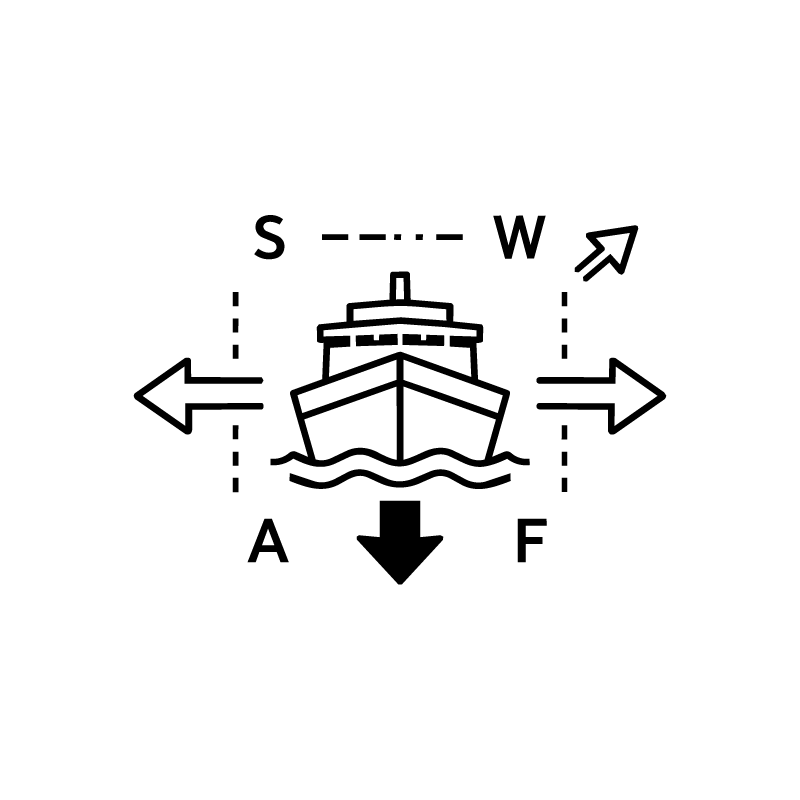
Abaft is best understood as a spatial term—specifically, it refers to a position toward the rear or stern of a ship, or to something situated behind another object in a nautical context. It is used to describe relative location and direction on vessels and in maritime navigation.
Abaft is best understood as a spatial term—specifically, it refers to a position toward the rear or stern of a ship, or to something situated behind another object in a nautical context. It is used to describe relative location and direction on vessels and in maritime navigation.
Themes: Orientation and navigation.
Abaft is closely tied to the theme of orientation, as it helps define spatial relationships and directions on ships. It is also relevant to navigation, since precise terminology for location is essential for safe and effective movement at sea.
Abaft is closely tied to the theme of orientation, as it helps define spatial relationships and directions on ships. It is also relevant to navigation, since precise terminology for location is essential for safe and effective movement at sea.
Nuance: Nautical specificity.
What distinguishes abaft within its category is its exclusive use in maritime contexts, where it provides a precise and universally understood reference point for crew and navigators. Unlike general terms for 'behind' or 'rear,' abaft carries technical significance in shipboard communication and operations.
What distinguishes abaft within its category is its exclusive use in maritime contexts, where it provides a precise and universally understood reference point for crew and navigators. Unlike general terms for 'behind' or 'rear,' abaft carries technical significance in shipboard communication and operations.