How to understand cuck in context
Main-category: Quality
Sub-category: Weakness
Sub-category: Weakness
Contextual explanation: Excessive submissiveness or passivity.
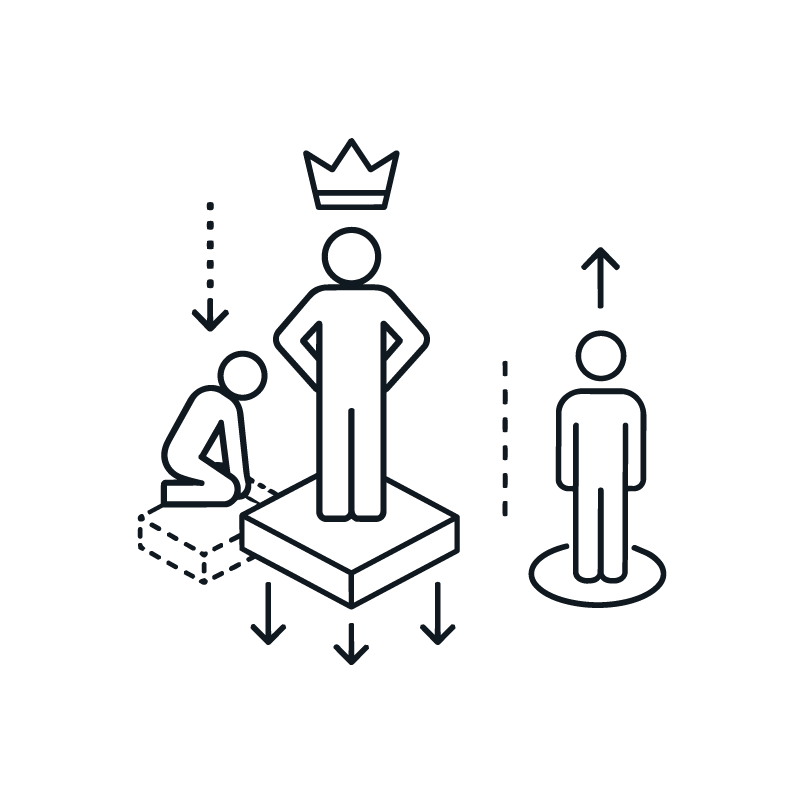
Cuck is best understood as a quality—specifically, a perceived weakness marked by excessive submissiveness, passivity, or compliance, often resulting in a person being dominated by others or failing to assert their own interests, status, beliefs, or boundaries.
Cuck is best understood as a quality—specifically, a perceived weakness marked by excessive submissiveness, passivity, or compliance, often resulting in a person being dominated by others or failing to assert their own interests, status, beliefs, or boundaries.
Themes: Power dynamics and self-assertion.
The concept of "cuck" is closely tied to themes of power dynamics and self-assertion. It highlights situations where an individual's lack of resistance or unwillingness to defend themselves leads to a loss of agency or respect within social or interpersonal contexts.
The concept of "cuck" is closely tied to themes of power dynamics and self-assertion. It highlights situations where an individual's lack of resistance or unwillingness to defend themselves leads to a loss of agency or respect within social or interpersonal contexts.
Nuance: Socially perceived deficiency in assertiveness.
What distinguishes "cuck" within its category is the social judgment attached to the perceived deficiency in assertiveness or self-protection. The term often carries a derogatory connotation, emphasising not just passivity, but a failure to meet expected standards of self-advocacy or boundary-setting.
What distinguishes "cuck" within its category is the social judgment attached to the perceived deficiency in assertiveness or self-protection. The term often carries a derogatory connotation, emphasising not just passivity, but a failure to meet expected standards of self-advocacy or boundary-setting.