How to understand multimodality in context
Main-category: Communication
Sub-category: Representation
Sub-category: Representation
Contextual explanation: Integration of multiple modes to enrich meaning.
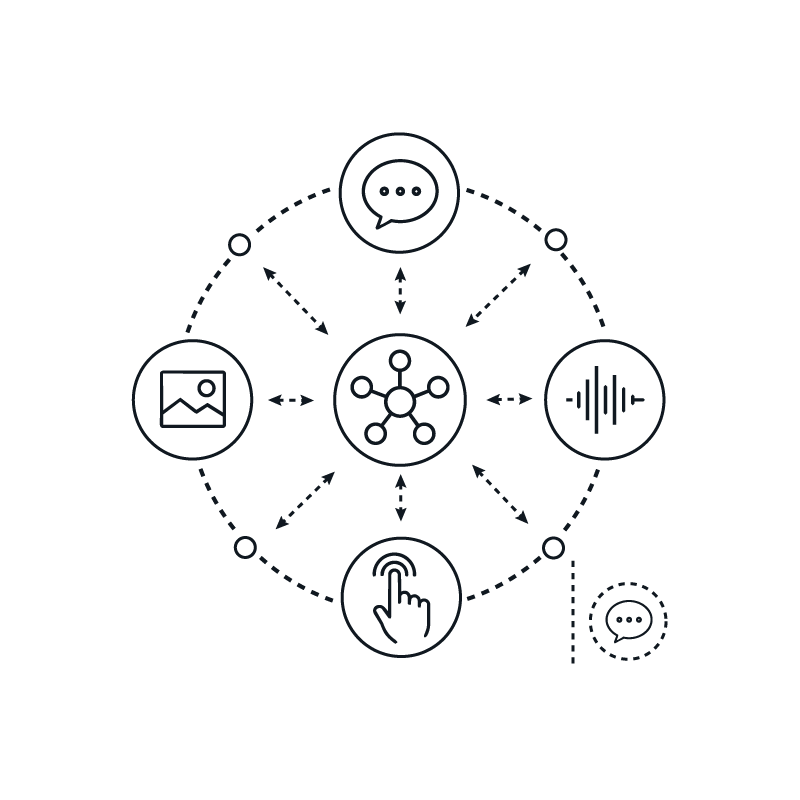
Multimodality is best understood as a form of representation—specifically, the integration of various modes (such as visual, verbal, auditory, and gestural) to communicate or interact in ways that enrich and deepen meaning beyond what a single mode could achieve.
Multimodality is best understood as a form of representation—specifically, the integration of various modes (such as visual, verbal, auditory, and gestural) to communicate or interact in ways that enrich and deepen meaning beyond what a single mode could achieve.
Themes: Communication diversity and enrichment.
Multimodality is central to the theme of communication diversity, as it leverages different representational forms to enhance understanding and engagement. This theme highlights how combining modes can make messages more accessible, persuasive, or memorable across different audiences and contexts.
Multimodality is central to the theme of communication diversity, as it leverages different representational forms to enhance understanding and engagement. This theme highlights how combining modes can make messages more accessible, persuasive, or memorable across different audiences and contexts.
Nuance: Synthesis of modes.
What distinguishes multimodality within its category is its emphasis on the synthesis and interplay of multiple communicative modes. Rather than relying on a single channel, multimodality focuses on how the combination of modes creates new layers of meaning and supports more nuanced or effective communication.
What distinguishes multimodality within its category is its emphasis on the synthesis and interplay of multiple communicative modes. Rather than relying on a single channel, multimodality focuses on how the combination of modes creates new layers of meaning and supports more nuanced or effective communication.