How to understand narrative comparison in context
Main-category: Communication
Sub-category: Narrative
Sub-category: Narrative
Contextual explanation: Deliberate comparison of stories or perspectives.
Narrative comparison is best understood as a communicative process—specifically, the intentional act of examining two or more stories, experiences, or narrative perspectives to reveal similarities, differences, patterns, or deeper meaning. This approach helps clarify how narratives relate, contrast, or inform one another within a broader context.
Narrative comparison is best understood as a communicative process—specifically, the intentional act of examining two or more stories, experiences, or narrative perspectives to reveal similarities, differences, patterns, or deeper meaning. This approach helps clarify how narratives relate, contrast, or inform one another within a broader context.
Themes: Interpretation and meaning-making.
Narrative comparison is closely tied to the theme of interpretation, as it enables individuals or groups to extract meaning by juxtaposing different accounts. It supports critical thinking, cultural analysis, and the identification of recurring motifs or divergent viewpoints across narratives.
Narrative comparison is closely tied to the theme of interpretation, as it enables individuals or groups to extract meaning by juxtaposing different accounts. It supports critical thinking, cultural analysis, and the identification of recurring motifs or divergent viewpoints across narratives.
Nuance: Analytical juxtaposition.
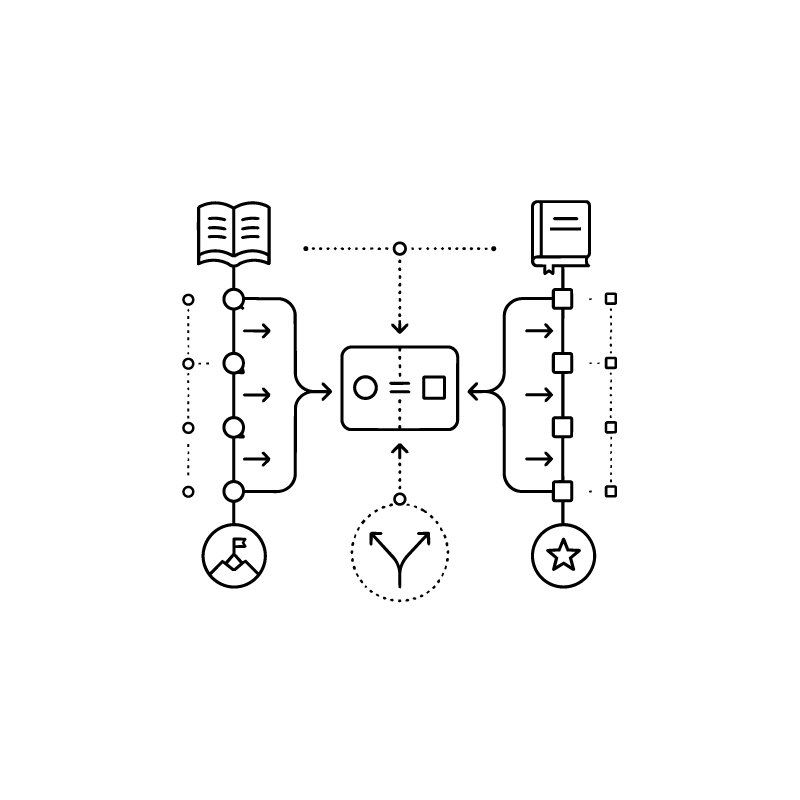
What distinguishes narrative comparison within its category is its analytical focus—the emphasis is on systematically placing narratives side by side to uncover insights that would remain hidden if each were considered in isolation. This nuance highlights the methodical and reflective nature of the concept.
What distinguishes narrative comparison within its category is its analytical focus—the emphasis is on systematically placing narratives side by side to uncover insights that would remain hidden if each were considered in isolation. This nuance highlights the methodical and reflective nature of the concept.