How to understand problem management in context
Main-category: Process
Sub-category: Optimisation
Sub-category: Optimisation
Contextual explanation: Practice for preventing and controlling recurring issues.
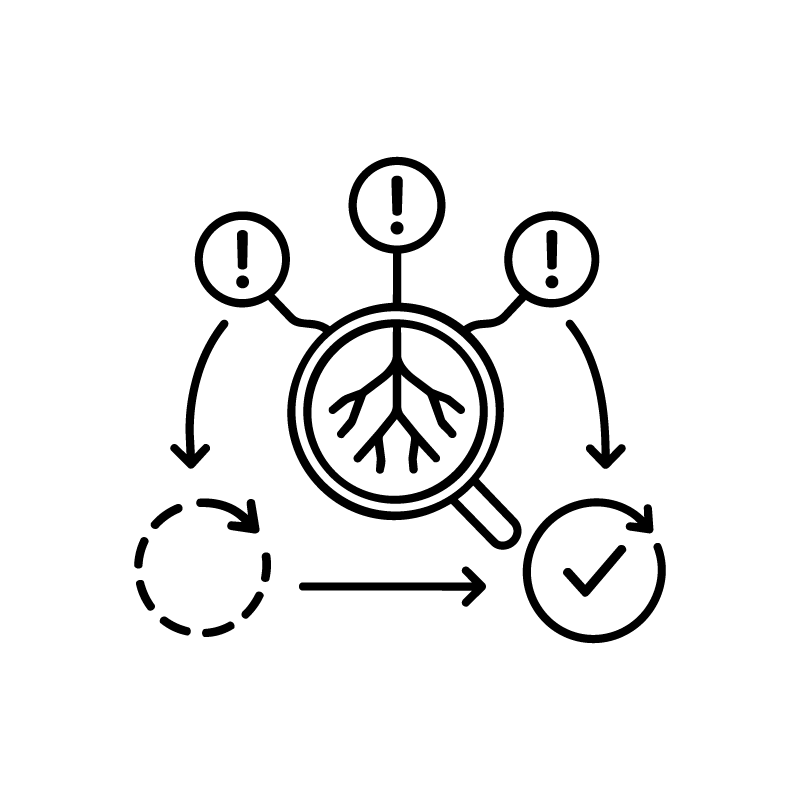
Problem management is best understood as a process—specifically, a structured practice focused on identifying the root causes of recurring or potential incidents, controlling their effects, documenting known issues, and implementing measures to prevent recurrence. This ensures that problems are not only resolved but also systematically prevented from reoccurring, improving overall system reliability and efficiency.
Problem management is best understood as a process—specifically, a structured practice focused on identifying the root causes of recurring or potential incidents, controlling their effects, documenting known issues, and implementing measures to prevent recurrence. This ensures that problems are not only resolved but also systematically prevented from reoccurring, improving overall system reliability and efficiency.
Themes: Prevention and continuous improvement.
Problem management is central to the theme of prevention, as it proactively addresses underlying causes rather than just symptoms. It also embodies continuous improvement by systematically reducing the likelihood and impact of future incidents through documentation and corrective actions.
Problem management is central to the theme of prevention, as it proactively addresses underlying causes rather than just symptoms. It also embodies continuous improvement by systematically reducing the likelihood and impact of future incidents through documentation and corrective actions.
Nuance: Root cause analysis and proactive control.
What distinguishes problem management within its category is its emphasis on root cause analysis and proactive control—focusing not just on resolving immediate issues, but on understanding and eliminating the factors that lead to recurring problems, thereby enhancing long-term stability and performance.
What distinguishes problem management within its category is its emphasis on root cause analysis and proactive control—focusing not just on resolving immediate issues, but on understanding and eliminating the factors that lead to recurring problems, thereby enhancing long-term stability and performance.