How to understand QAM (quadrature amplitude modulation) in context
Main-category: Technology
Sub-category: Networks
Sub-category: Networks
Contextual explanation: Modulation technique for data transmission.
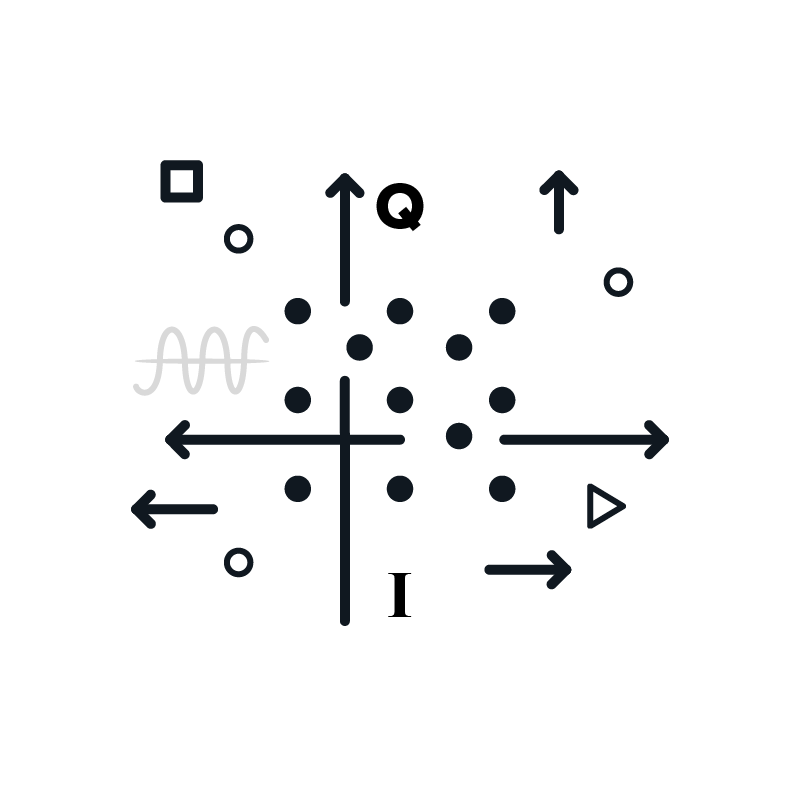
QAM (Quadrature Amplitude Modulation) is best understood as a technology—specifically, a signal modulation method used in communication networks to transmit data efficiently by varying both the amplitude and phase of a carrier wave using two combined signals.
QAM (Quadrature Amplitude Modulation) is best understood as a technology—specifically, a signal modulation method used in communication networks to transmit data efficiently by varying both the amplitude and phase of a carrier wave using two combined signals.
Themes: Digital communication and signal processing.
QAM is central to the theme of digital communication, as it enables the reliable and high-capacity transfer of information over various transmission media. It is also closely linked to signal processing, since its implementation requires precise manipulation and interpretation of electronic signals.
QAM is central to the theme of digital communication, as it enables the reliable and high-capacity transfer of information over various transmission media. It is also closely linked to signal processing, since its implementation requires precise manipulation and interpretation of electronic signals.
Nuance: Combined amplitude and phase modulation.
What distinguishes QAM within its category is its unique approach of combining both amplitude and phase modulation, allowing for higher data rates and more efficient use of bandwidth compared to simpler modulation schemes.
What distinguishes QAM within its category is its unique approach of combining both amplitude and phase modulation, allowing for higher data rates and more efficient use of bandwidth compared to simpler modulation schemes.